Painting Labor Rates 2026: How Much to Charge Per Hour
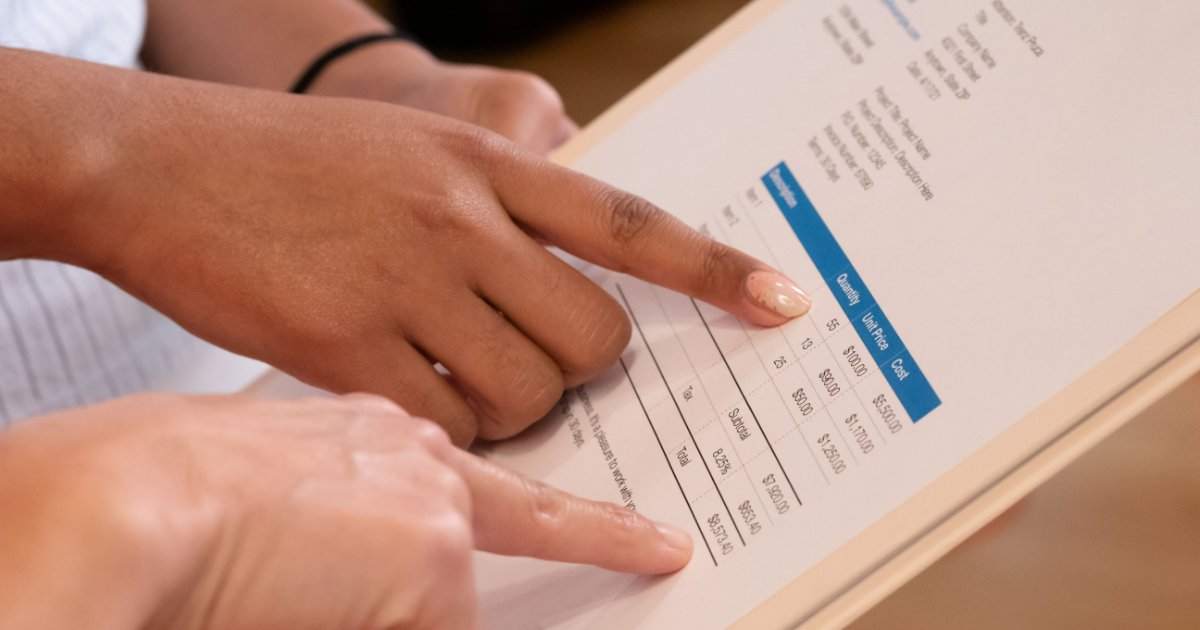
A painter with fifteen years in the trade once told me the sentence that contains the whole problem: "I charge $30 an hour because that is what I make."
That is the mistake, complete, in one line. What you earn per hour and what you must charge per hour are two different numbers. Confuse them and you work all year and end up with nothing.
The number you get paid, and the number you need
The US Bureau of Labor Statistics puts median pay for construction and maintenance painters at about $48,660 a year, roughly $23.40 an hour. That is a painter's wage.
A licensed painting contractor bills $25 to $75 an hour, and past $100 in expensive cities. The gap is not greed. It is everything an employee does not pay for and you do.
You pay for the truck. Gas, insurance, maintenance, the day it will not start.
You pay for insurance. Liability, workers comp if you have help, the licence.
You pay for the hours you cannot bill. Driving to look at the job, writing the estimate, the supply run, chasing the payment. That can be a third of your week and nobody pays it separately.
You pay for the empty days. December, the rain, the week between two jobs.
And you pay for tools, ladders, the sprayer, the brushes that wear out.
Charge your wage as your rate and you are covering all of that out of your own pocket.
The formula, in three steps
Simpler than it sounds, and it works for any trade, not just painting.
Step 1: your true labour cost. What an hour of work actually costs you, yours or your helper's, taxes and burden included. If you pay a helper $25, he costs you more than $25.
Step 2: add overhead. The rule profitable contractors use is 40 to 60 percent on top of labour cost. That is the truck, insurance, phone, licence, and the hours you cannot bill.
Step 3: add profit. Between 15 and 25 percent. Profit is not your wage. Your wage is already in step 1. This is what the business keeps to grow, to survive a bad month, to replace the ladder when it breaks.
Round numbers. Labour cost $30 an hour. Add 50 percent overhead and you are at $45. Add 20 percent profit and you are at $54 an hour. That is your price, not the $30.
If that feels like a lot, check the market: $25 to $75 an hour is the normal range. You are inside it.
The three ways to charge
| Method | When it fits | Typical 2026 range |
|---|---|---|
| Hourly | Odd jobs, touch ups, repairs where you cannot see what you will find | $25 to $75 an hour |
| Per square foot | Standard interiors and exteriors you can measure | $2 to $6 a square foot interior |
| Day rate | Whole houses, multi day jobs with a crew | $300 to $600 a day |
Those are market reference points from the US. Your number comes from your formula, not from this table.
What actually decides whether you make money: your production rate
Here is the part almost nobody measures. An experienced painter covers 150 to 350 square feet an hour, depending on the surface, the finish, and whether you are rolling or spraying.
That range is enormous, and it is the difference between making money and losing it on the same job at the same price.
Measure yours. After every job write down two things: the square footage you painted and the hours you actually worked. Ten jobs and you will know your real production rate. Then you can quote per square foot with confidence, because you know your hours.
Without that number you are guessing, and guessing always quotes low, because nerves about the price push it down.
The three mistakes that cost the most
Charging your wage as your rate. The one from the top. It leaves nothing for the truck or for December.
Not charging for prep. Filling, sanding, caulking, protecting. It is half the job and it is the first thing people delete from an estimate to look cheaper. If it is not on the page, the client assumes it is free. Write it as a line with its hours. Here is how to break it out.
Dropping the price to win the job. Cut your price 20 percent and you did not lose 20 percent. You lost nearly all your profit, because profit was the 20. You do the same tiring work for free.
When the client says it is too expensive
Do not defend the number. Explain what it buys.
Almost always they are comparing your estimate against one with no prep, no mention of coats, and no paint named. If yours says all of that, you are not more expensive, you are clearer. Knowing when it is an estimate and when it is a quote also keeps that conversation from turning into an argument later.
And if the money genuinely is not there, do not cut your price, cut the scope. One coat instead of two where it will hold, one room fewer, different materials. The client chooses, and you keep your rate.
The short version
Your wage is not your rate. Add 40 to 60 percent overhead and 15 to 25 percent profit on top of your labour cost, and that is your price. Measure your real production rate over ten jobs. Charge for prep in writing. And when they push, move the scope, never the rate.
Boceto builds the itemized estimate with your numbers in seconds, in English or Spanish, so prep and coats always make it onto the page. Free to try on your next job.
About Boceto
Boceto turns what you say into a professional estimate in seconds, in English or Spanish, and sends it by WhatsApp, email or text. Built for the people who do the work, not for an office.
Start freeAlso on the blog
How Long Does a Contractor Estimate Take? Real TimelinesSmall jobs: same day or next. After a site visit: 2 to 3 days. Waiting on supplier pricing: up to a week. When to follow up, and when to move on.Best Invoice App for Contractors (2026): 11 Ranked
A tier list for solo tradespeople and small crews. Real prices, honest weaknesses, and where each app fits. Boceto included, and where it losesEstimate vs Quote vs Invoice: What's the Difference?
Estimates approximate, quotes commit, invoices collect. What each document does, when to send it, and how one flows into the next on a real job.